December 20th 2016, a Boeing 727 cargo freighter flying under Aerosucre livery was taking off from a rural runway in Colombia carrying a load of fish. There were 6 souls on board, 5 crew and an off duty employee hopping on a jump seat to get back to his family. The plane was taking off from a short runway, overweight, and with a tail wind; the flight was doomed from the start. The plane passes the point of no return while barreling down the runway at full throttle and the pilot had not made the decision to abort; the plane was on a set path which would see it hit the ground minutes later. As it reached the end of the runway, it had yet to become airborne. It struck the perimeter fence and lost part of its landing gear in the process.
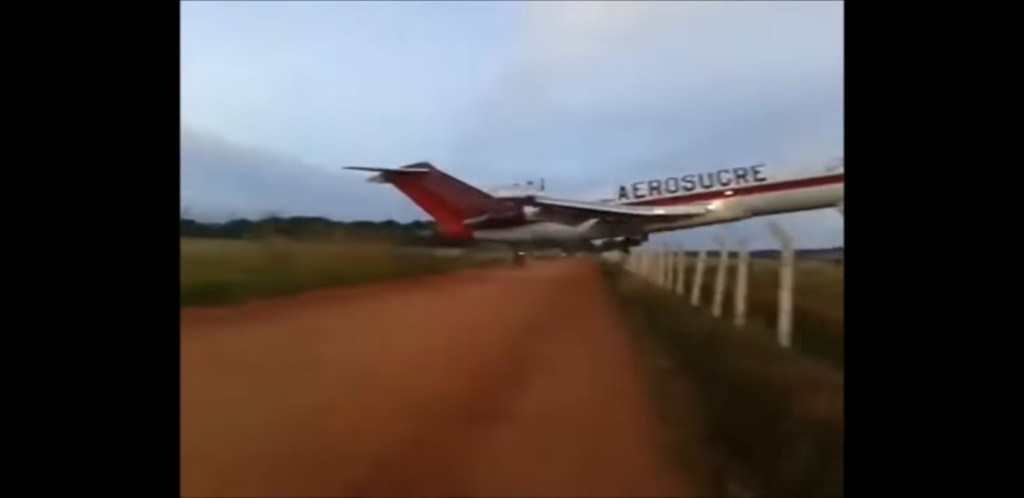
It’s not entirely clear what happened in the interim. The video that exists cuts off between takeoff and the final moments. The jet is seen trying to make it’s way back to the airport, dumping fuel as is procedure for an emergency landing after takeoff.

At some point during the fuel dump, the plane tilts down towards the ground. I imagined being a pilot on that fateful and routine trip struggling to maintain the jet airborne all the while knowing it would not make it and understanding that all who were on board were as doomed as the flight.

A ball of fire emerges from behind the trees in the distance and the telltale column of smoke from an explosion rises from the resulting wreckage.
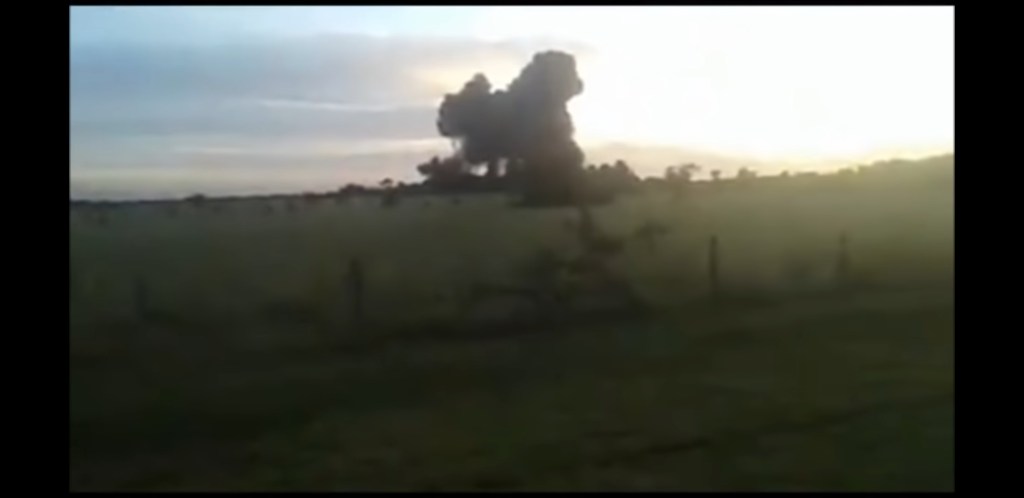
One very fortunate person survived that day, the off duty employee going home sitting in the jump seat at the very back of the plane. Five people lost their lives. Their families will never hear their voices again. Did they have children? Did someone depend on them? What kind of aspirations did they have? The debris field was not very well documented but the few images that did come out are heart wrenching.

The disconnect from maintenance to a real life was disconcerting and did not sit well with me. One of the engines I inspected was installed and powering that aircraft when it hit the ground. Although it was not any fault of mine or the engine or the people who installed it, I couldn’t help but to think that my hands were part of that and it was making me rethink my career in aviation. Here is the full video:
My hairs stand on end every time I see this. From this moment on, I decided I no longer wanted to work in aviation. This accident showed me that at any point, on any day, it could be your turn. Aviation maintenance is held responsible if anything is found to be the fault of the technician who worked on a component that caused an accident. Had this been a direct result of my work (not likely in most scenarios but it’s still plausible) I would have been looking at 5 counts of involuntary manslaughter, the rest if my life behind bars. I lost trust in certain key mechanics in the shop causing me to scrutinize their work at every turn and began to get more strict on procedures. One day, a finished and tested engine was being wrapped up to be shipped to a customer when I was alerted to a questionable repair on a non vital part of an engine liner. I did not take that very well and when confronting the mechanic responsible, I was met with dismissive comments. I lost faith in the shop as a whole; it was time for me to move on.
I’ll still freelance inspections, however not in the same capacity that I performed while at the shop. And I definitely do not release engines into service anymore. Just perform inspections for aquisitions and sales.
Update: due to Corona virus pandemic, I am no longer performing engine work. It was fun while it lasted and i learned loads from this experience.
 Oicata Ceramics
Leave a comment