It had been over 5 years since I attempted to produce a concise series of pieces intentionally. A body of work in clay that felt whole. I wanted to continue to explore the subject of rigid vs organic and see what could come of it in a mass produced scale. The turtles are pet projects creating a series over many years rather that being a product of focus and planning. Production potters and artists make a series of work in much shorter time spans but continue this body of work for years as it develops and mutates in its design and method. College allowed me to practice production pottery in a setting designed to nurture mass production. Bill Kidd was able to produce mass volumes of ceramic pieces in this studio so it was possible in this setting as well. Could a space limited studio hold two production potters? And did I have the time and space to begin mass production? With one session a week for 2 hours at a time, production was going to be difficult. So I attempted it anyway.
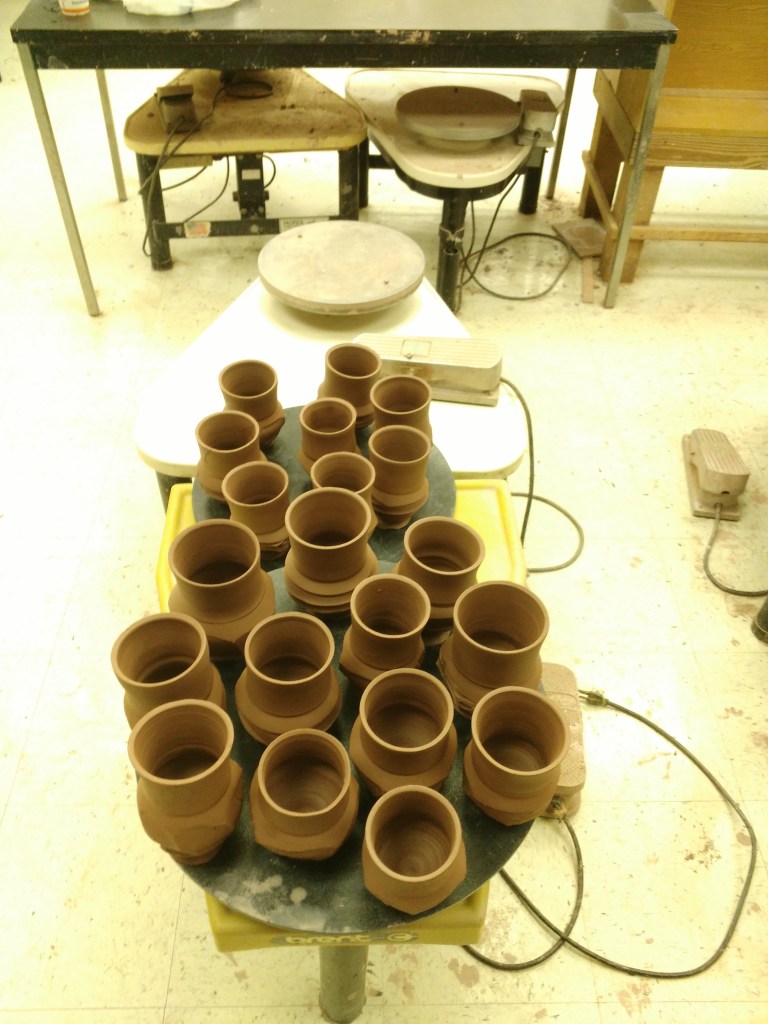
I drew on the skills I had picked up in college and re-learned in this studio to start producing a line of cups. Since they were small, quick, and easy to assemble, it made sense that this was the first series I intentionally produced out of college.
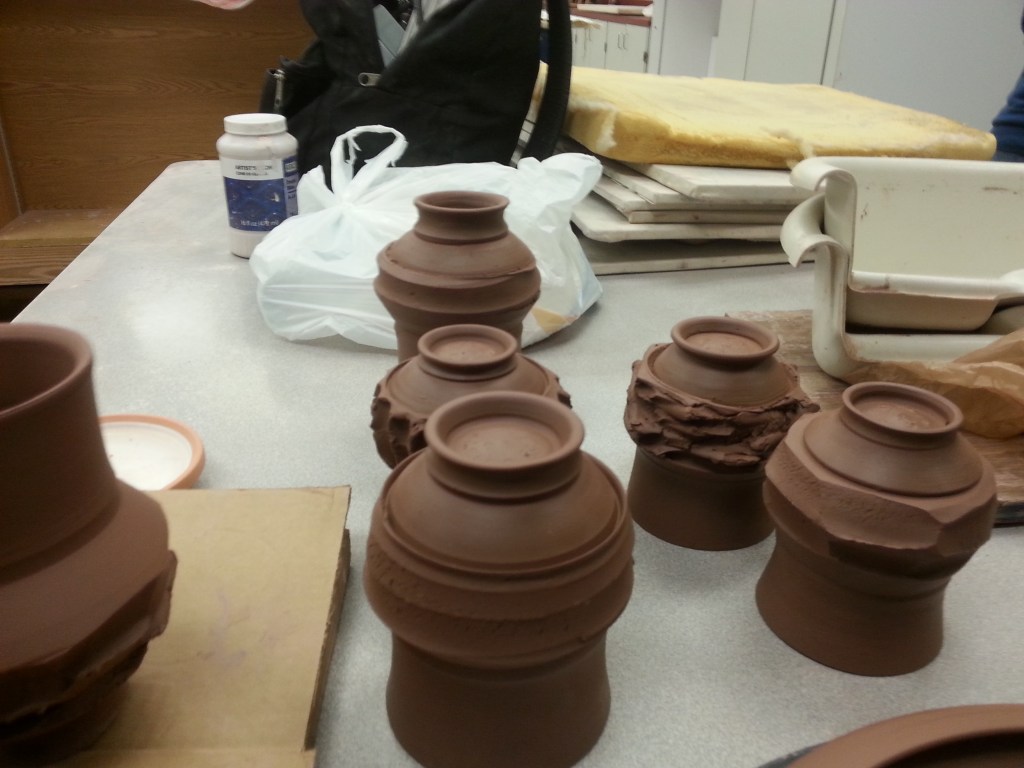
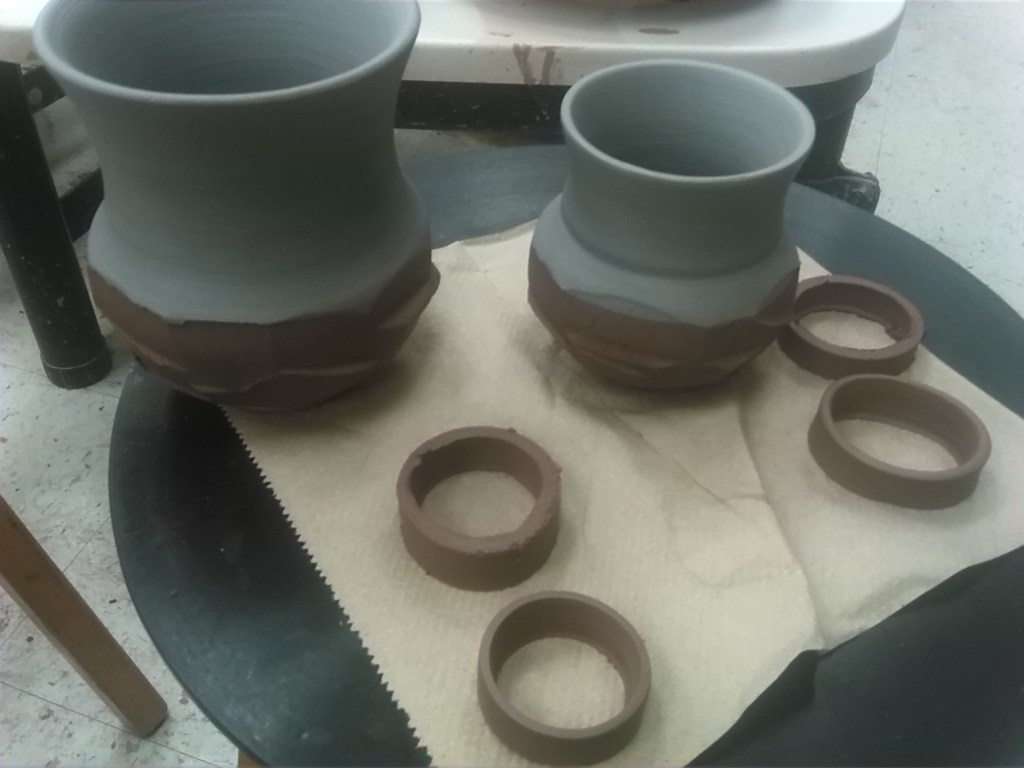
Like the first pieces made when I got back into a studio setting, these cups were clumsy and varied in design. Still trying to get my footing as to what the best route is to produce these with ease. But the repetitive process of production allowed me to hone in on a design that both worked well in production and allowed me the freedom to make the pieces unique while maintaining some level of uniformity. This development did not show up until later, after further practice of technique.
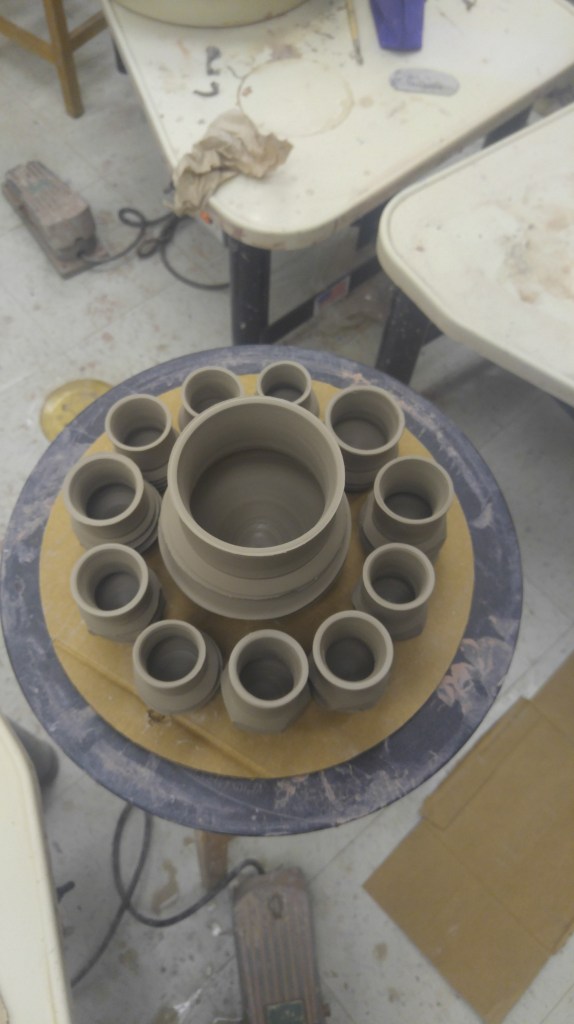
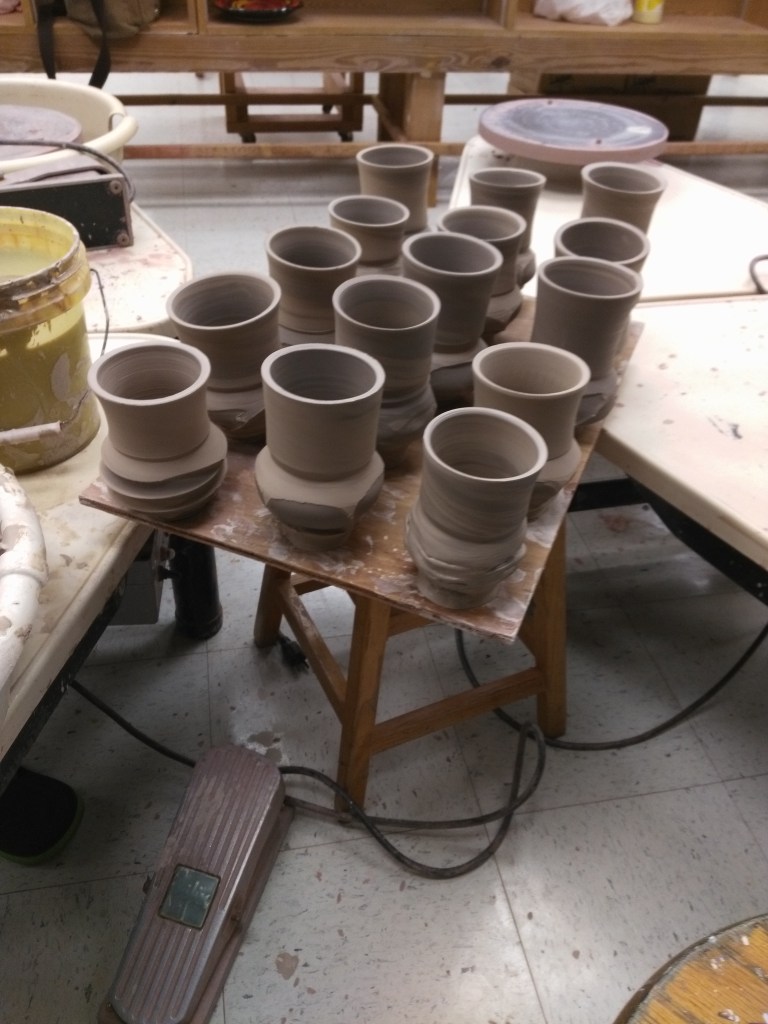
I began alternating between red and white Earthenware to explore both finish and ease of making. Each clay body has its own pros and cons that most people without a ceramics background would not notice. The red clay is very forgiving and much denser when fired. It has different reflective properties than white clay which makes the glazing process way trickier. The fact that red clay is full of iron oxide modifies the glaze even further; some glazes take advantage of this excess iron content to make some beautiful colors and finishes. The white clay, on the other hand, has higher color fidelity and a higher reflective surface which allows for more range and control of the glaze color and application. It also highlights any defects in production and finish. Since I couldn’t select a main body to work with, I decided to use whatever I had in front of me at the time of production. This made for a varied selection of cups in the end.
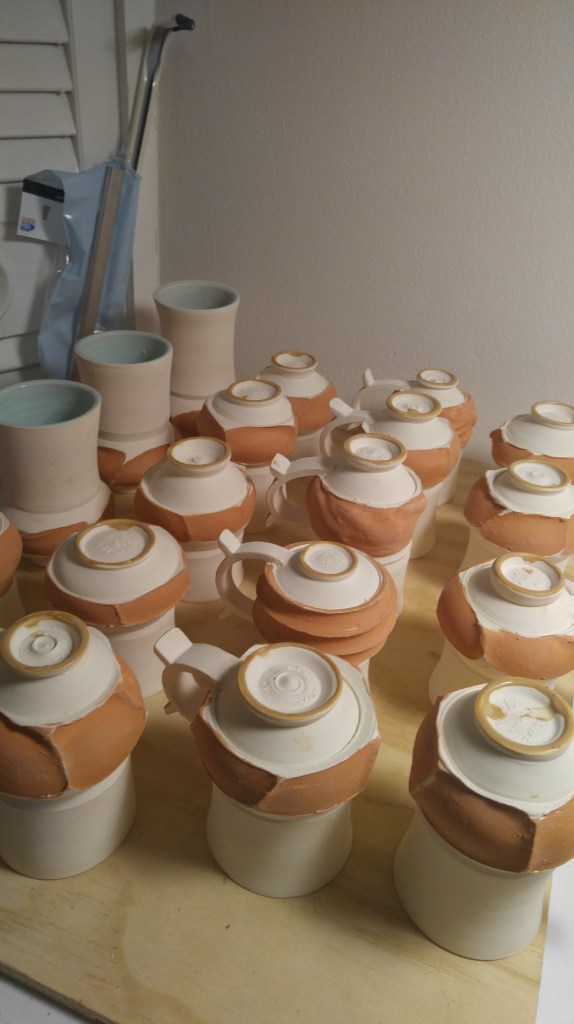
Producing in bulk again felt great, just like college except this time I didn’t have a deadline, I was not receiving a grade for the work, and no one was telling me what to do with the direction of my work. I felt more independent and accomplished than ever and it was a great feeling. I always dreaded glazing my work in fear of ruining it at the very last moment. This time, I had enough pieces that the fear never manifested itself.
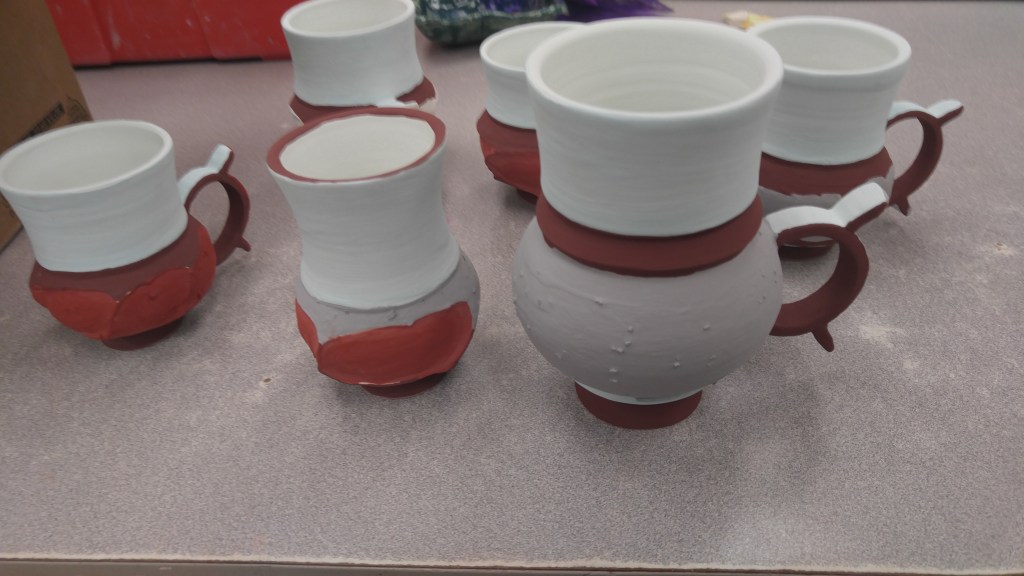
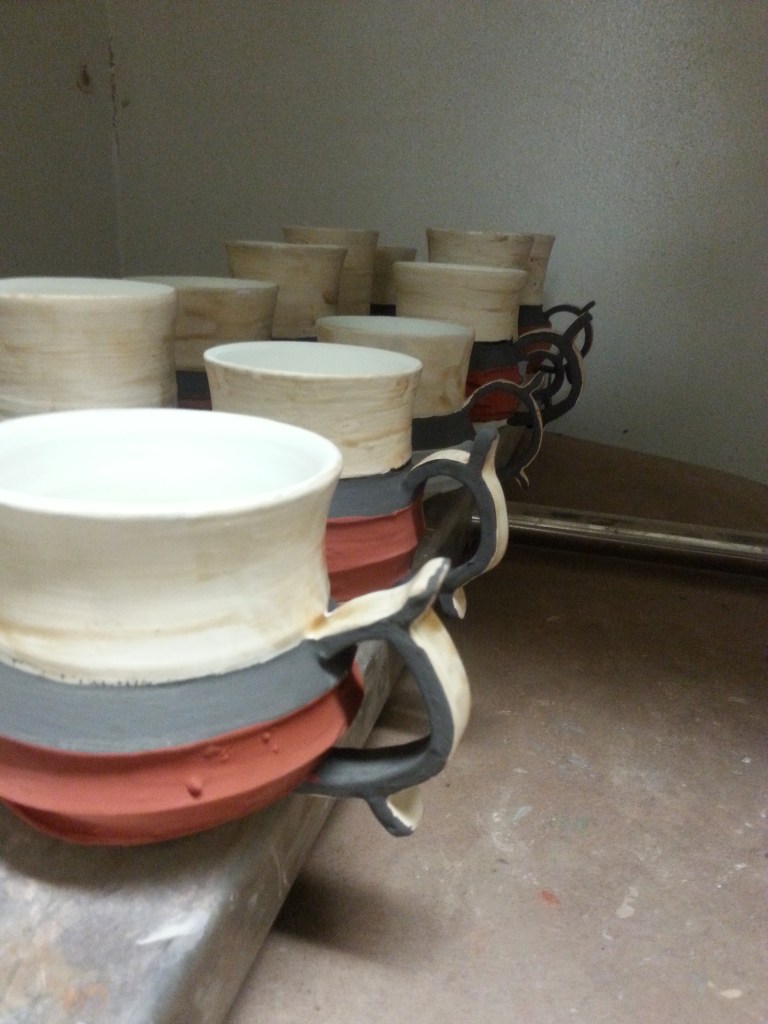
This is the point I wanted to get to. Making without fear, creating work without bounds, and engaging the medium in a meaningful way. The end results were as varied as the cups themselves. Some good, some ugly, all a consice and developed body of work which felt complete.
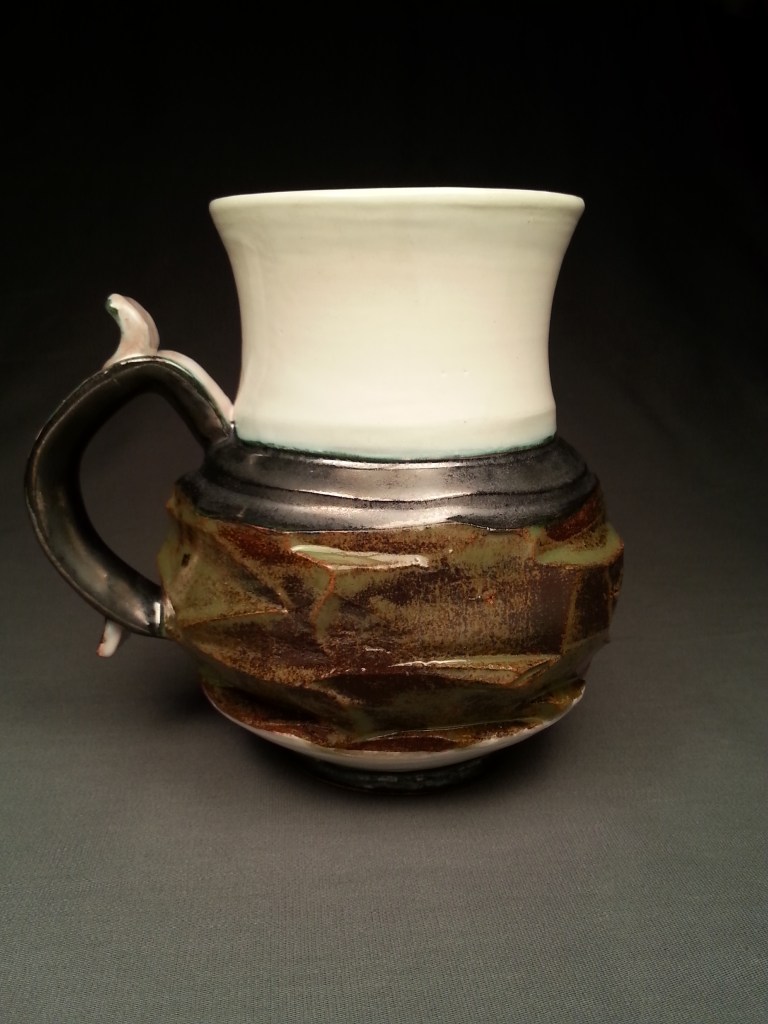
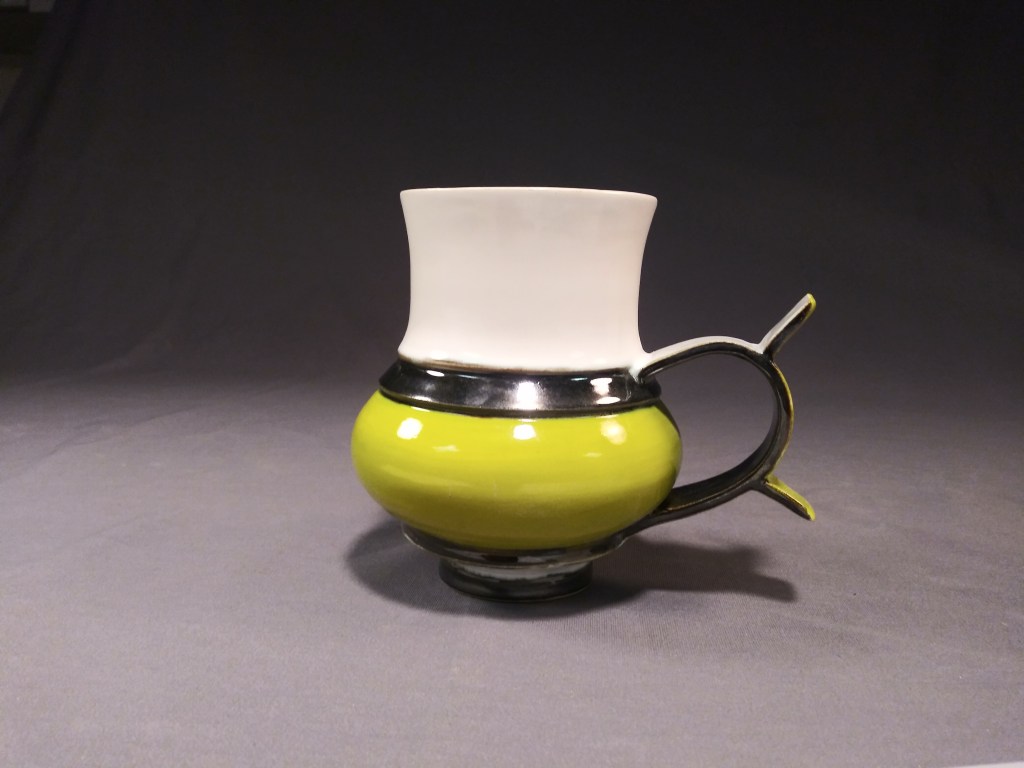
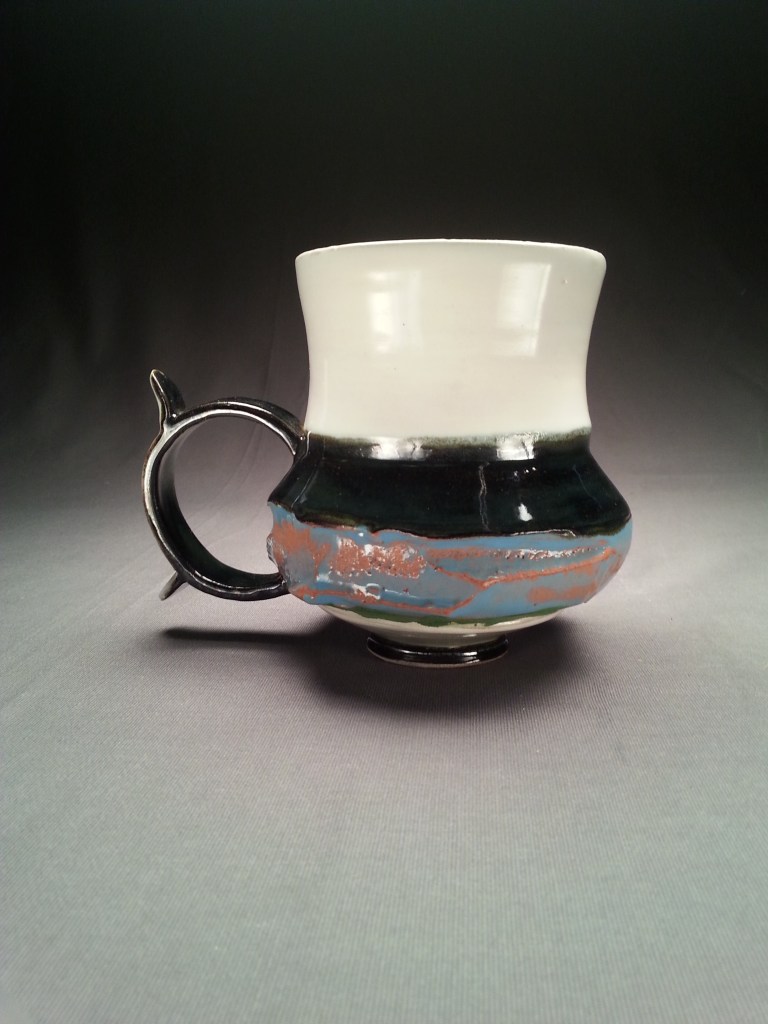
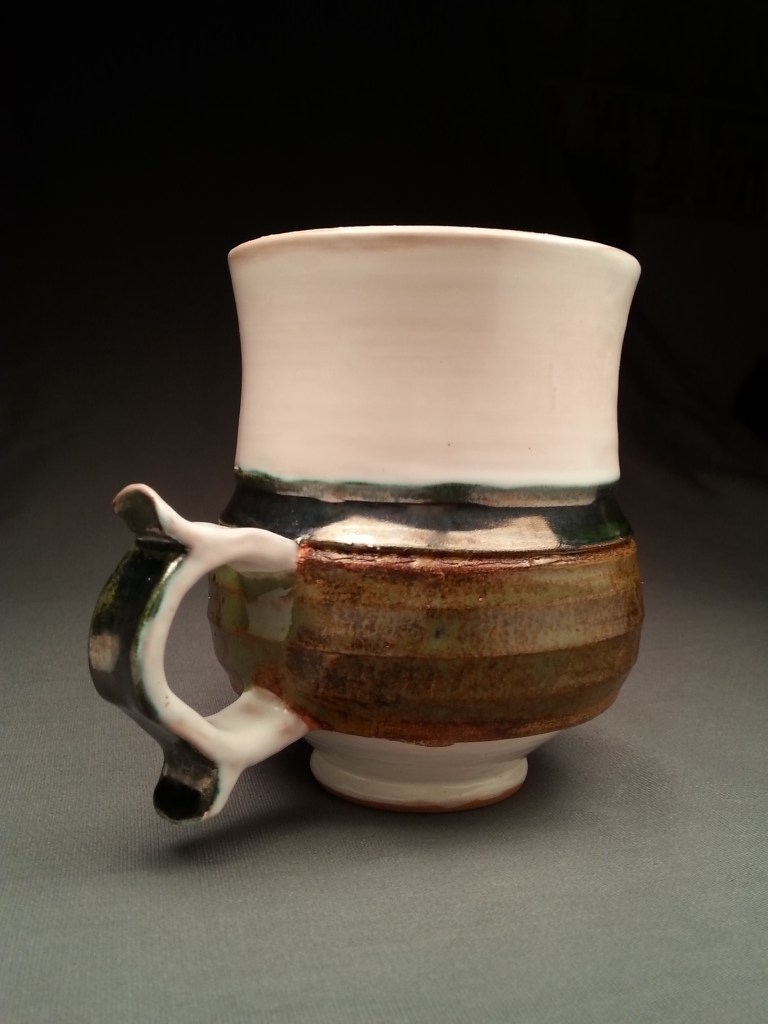
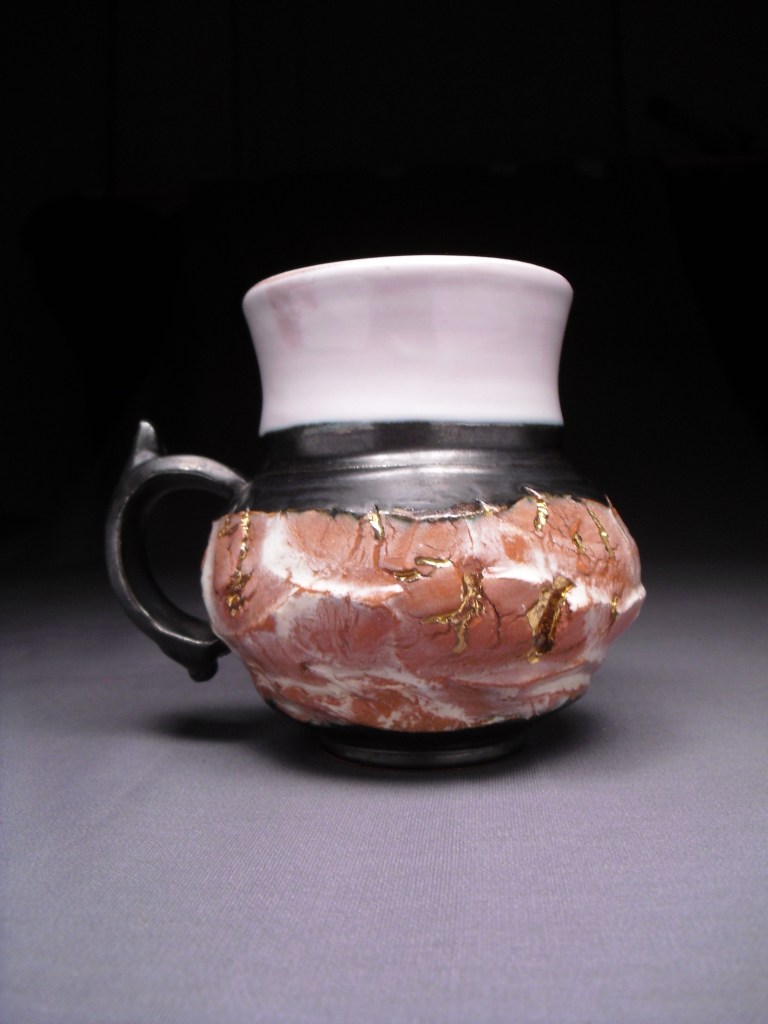
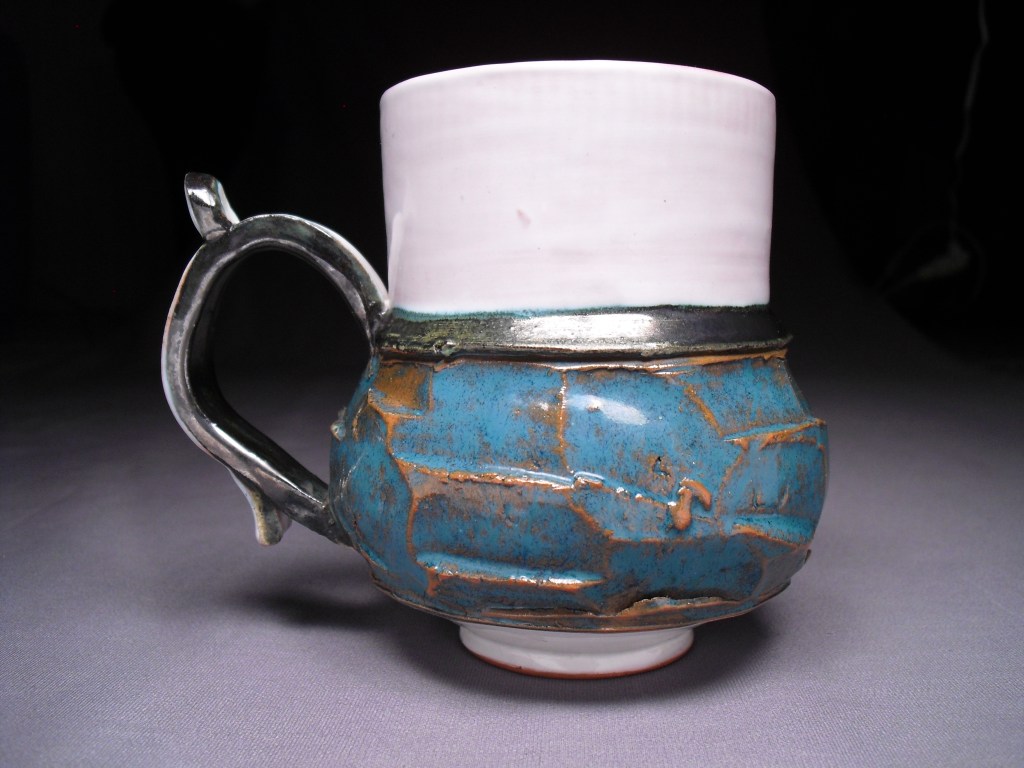
Further exploration into both production and methodology made sure that each cup I made thereafter was better than the last, or at least attempted to improve on the previous one. Each cup as unique as the next while maintaining aesthetic. This all culminated into the piece seen in the first post, and others very similar to it.
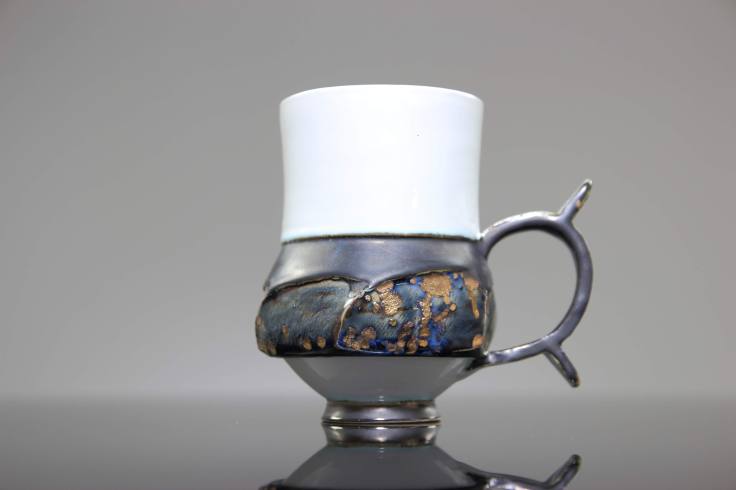
This is what I consider the current king of the cup series. The best of the best. A work of art that flies in the face of those who call ceramics simple craft. I will not sell this piece. I was able.to produce a hefty amount of cups which in turn allowed me to start selling them. I took cups everywhere I went and whenever I had the opportunity to use one while others were around, I did so and somehow it became a talking point and a subsequent sale.
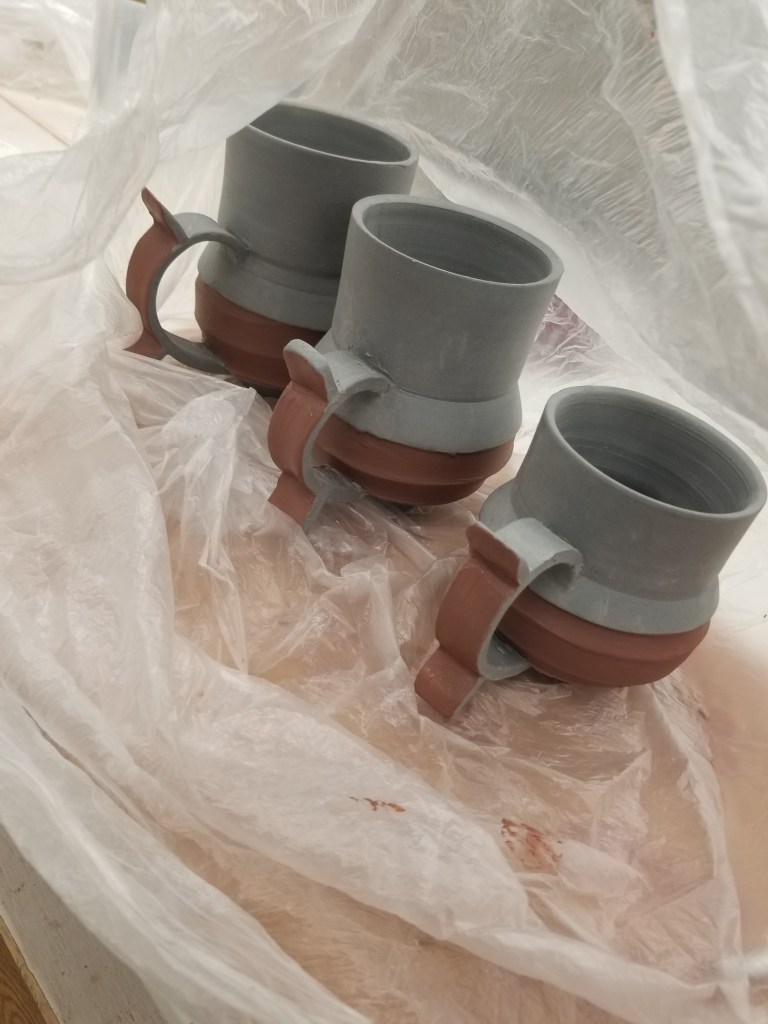
The cup making continues to this day. Each cup striving to be like the king cup or better. I believe this is my matured aesthetic for this series and future cups will all have a similar finished look. Development of this aesthetic will be slower than at first simply because I am happy with what I see. Picking up projects that veer away from this helps to look back at the cups from a different perspective. It let’s me evaluate the work and make small modifications as I make more pieces. Keep an eye out on the pages menu of the site because I will be posting more work as it come out of the kiln. Production will continue as long as I have access to a studio.


Leave a Reply